
AI and Duplicating Products
What You Need to Know Right Now
Prepared by Westmir | April 2026

INTRODUCTION
See what is changing. Build a smart plan. Move forward with confidence.
AI is not a technology story. It is a business story, and it is already affecting how your customers search for vendors, how your competitors operate, and how your team works. You do not need to become an AI expert. But you do need enough of a picture to make a few smart decisions in the next six to twelve months.
This brief was prepared to give you exactly that, a clear and practical look at what is happening with AI, what it means for a business like Duplicating Products, and what questions you should be asking right now..
Keep scrolling.

PART 1
The Big Picture: What AI Is Doing Right Now
Artificial intelligence has moved from something people read about to something reshaping day-to-day business reality. In 2026, AI tools are handling customer communication, drafting marketing content, managing scheduling, and changing how people search for and evaluate vendors. This is not coming. It is here.
The businesses that benefit most are not the largest or best-funded. They are the ones that understand what is changing and respond with a clear plan. Those that ignore it are watching the gap widen, but those that rush in without direction create inconsistency and confusion.
The honest truth: AI is making everything faster and cheaper. The businesses that come out ahead use that efficiency to serve their customers better, not just to cut corners.
What AI Does Well (and What It Cannot Do)
AI is strong at drafting content, routine communication, summarizing data, answering common questions, and improving response speed.
AI falls short at genuine relationships, accountability, judgment in complex situations, and the kind of trust built over years of working with someone.
For a relationship-driven business like Duplicating Products, the irreducibly human parts of what you do are a significant competitive asset right now.
PART 3
How AI Is Affecting Your Industry
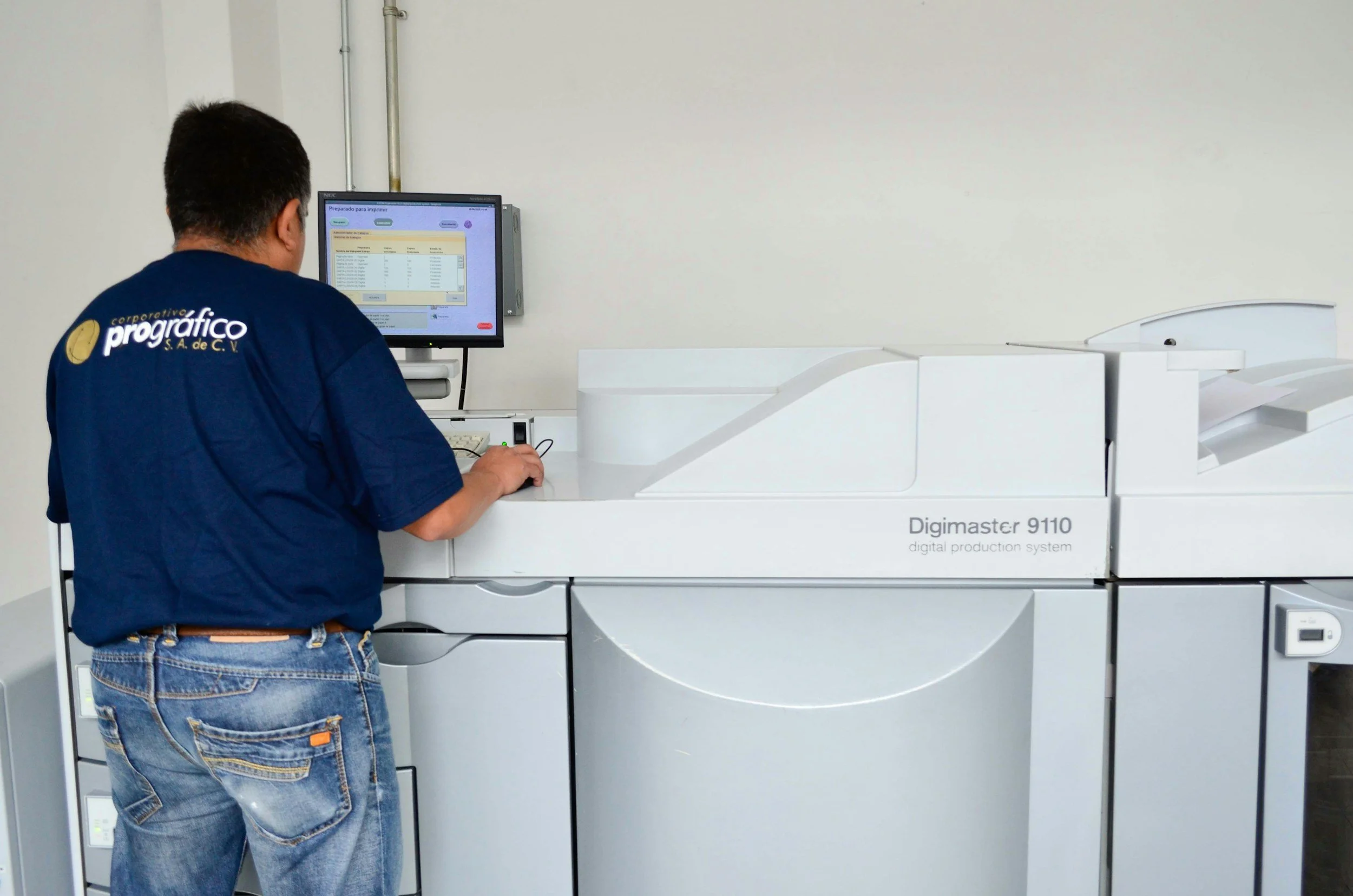
The office equipment and managed print industry is not immune to what is happening, though the core of what you sell, physical equipment, expert service, and local relationships, is among the more durable business models in the current environment.
Where AI is showing up in your industry:
Competitors are using AI to respond faster to inquiries, generate marketing content, and strengthen their online presence. Larger dealers and national players are experimenting with AI-assisted service diagnostics, automated customer communications, and predictive maintenance tools.
The document and workflow side of your business is being reshaped. AI is changing how clients manage and route documents, which affects what they need from their equipment. Managed print services are evolving. Clients are beginning to expect smarter, more connected systems that can anticipate needs and report usage automatically.
The good news is that Duplicating Products has something AI-driven competitors cannot easily replicate: 50 years of relationships, 30 local technicians, and a reputation built on genuine service. Those are assets in the AI era, not liabilities.
Your Competitive Strength Is AI-Resistant
Relationship-based B2B businesses with strong referral networks are among the most protected from AI disruption in their core operations.
A 3-hour average response time and 400 years of combined technician experience are the kind of human, local attributes that no AI-driven competitor can replicate.
The risk is not that AI replaces your service. The risk is becoming less visible compared to competitors using AI to improve their marketing and communication.

PART 2
How AI Is Affecting Your Customers
The way prospective customers research vendors and make buying decisions has changed significantly. When a business today needs a new multi-function system or a managed print solution, there is a good chance someone on their team is using an AI tool to research options before they ever pick up the phone.
They get a quick summary of the vendor landscape, form opinions about who looks credible, and arrive at the first conversation already further along in their decision than buyers used to be.
In practical terms, if Duplicating Products does not show up clearly and credibly in AI-assisted searches, you may not make the shortlist. This is not about being trendy. It is about visibility at the moment decisions are being shaped.
What Your Buyers Are Doing Differently
They research before they reach out. AI tools help them map the vendor landscape faster and more privately than before.
They compare credibility, not just features. A vendor that looks generic or outdated online is already at a disadvantage.
They value referrals even more. As AI-generated outreach increases, a genuine peer recommendation carries more weight.
They expect faster responses. AI is raising the bar for how quickly businesses communicate and follow through.

PART 4
How AI Is Affecting Your Team
Some of your staff (if not most) are almost certainly already using AI tools in some form, whether or not there is a company policy about it. This is true at nearly every business right now. The question is not whether AI is in your organization. It is whether it is being used in a way that is consistent, appropriate, and aligned with how you want to represent Duplicating Products.
A few things worth thinking about:
Some team members may be using AI to write emails or customer communications. Those may or may not sound like your company. Plus, people are quickly learning to spot AI driven content and will soon become annoyed by artificial responses and see your team as less personal and more automated.
AI tools can improve productivity in scheduling, documentation, and routine correspondence, but only with some direction and guardrails in place.
Without any guidance, you risk inconsistent quality, potential misinformation shared with customers, and a gradual drift from the personal service tone that defines your brand.
Simple AI tools could help your team spend less time on administrative work and more time on the kind of service your customers expect and remember.
You do not need a complex technology policy. You need a practical, straightforward guide that tells your team what is helpful, what to be careful about, and what still needs to be handled the Duplicating Products way.

PART 5
Questions Worth Getting Clear Answers To
You do not need to overhaul your business or become an AI company. But there are a handful of questions worth getting real answers to in the next six months.
Visibility — How does Duplicating Products appear when a prospect uses an AI tool or Google to find an office equipment vendor in your market?
Competition — Are your local or regional competitors using AI to become more responsive, better marketed, or more visible than you?
Your Team — What AI tools are your staff already using, and is there any guidance in place about how to use them well?
Customer Expectations — Are your customers beginning to expect faster responses, smarter recommendations, or more connected service from vendors like you?
Your Marketing — Is your current marketing keeping pace with how buyers now search and evaluate vendors in your category?
Your Strategy — Do you have a clear plan for how to respond to AI changes in your market, or are you currently watching and waiting?

PART 6
The Bottom Line
You do not need to know everything about AI. You need to know enough to make a few smart decisions, and you need the right people helping you ask the right questions.
The businesses that come out of this period strongest are not the ones that panicked or the ones that ignored it. They are the ones that got a clear picture of what was changing, made a practical plan, and moved forward with confidence.
Duplicating Products has the relationships, the reputation, and the service foundation that most businesses would spend decades trying to build. What makes sense right now is getting a clearer picture of how the world around you is changing and determining the right course of action.
How Westmir Helps You Move Forward
You already have the relationships, the reputation, and 50 years of service. Westmir helps you understand what is changing and determine the right course of action.
AI Visibility Audit — We examine how your business appears in AI-powered search tools and Google, identify the gaps, and deliver specific recommendations to improve your discoverability.
AI Impact Assessment and Strategy — A focused review of how AI is affecting your industry, your customers, your marketing, and your team. You walk away with a clear picture and a practical plan with real next steps.
Team AI Guidance — Simple, practical standards for how your staff can use AI tools responsibly, reducing risk and keeping your communication consistent with who you are as a company.
Ongoing Advisory — For clients who want to stay current as AI continues to reshape the landscape, Westmir provides regular monitoring, competitor tracking, and strategic guidance.
Click the button below to schedule a time to talk with Kevin McMillan about how AI is affecting your industry, audience, and team.